About All Tours Blue Fire ToursFrom Bali ToursAnd Mount Bromo ToursFrom Surabaya ToursFrom Banyuwangi ToursFrom Bali ToursFrom Yogyakarta ToursFrom Malang Tours Directions Hours & Fees
Find Tours 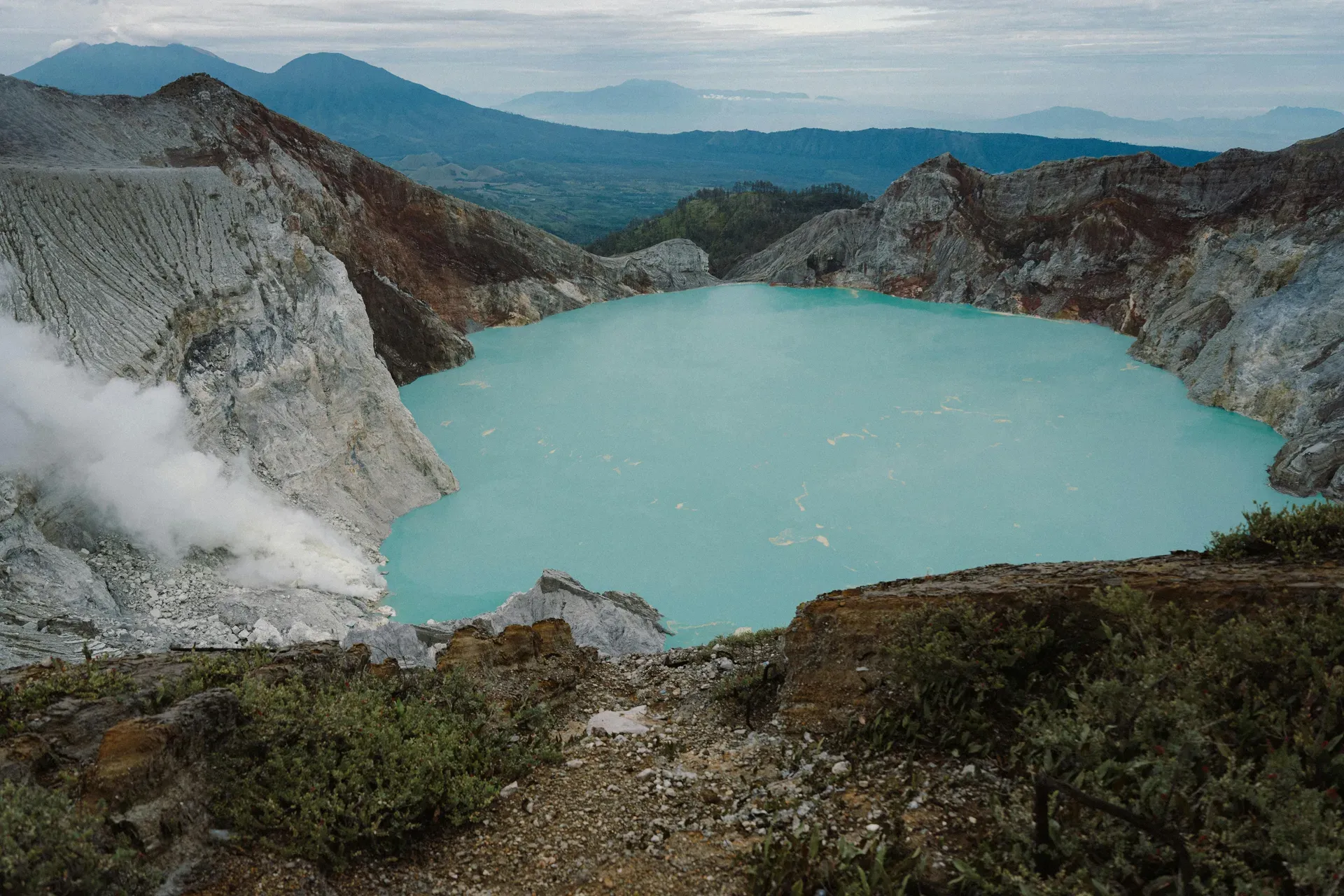
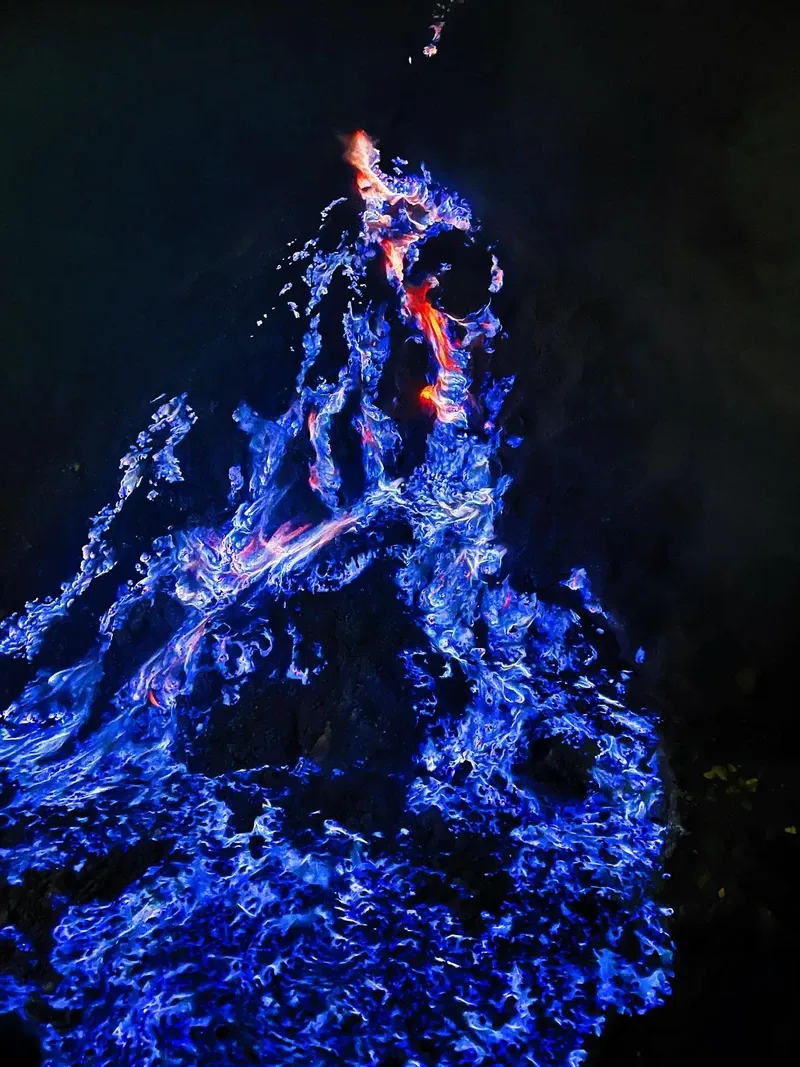
Kawah Ijen is an active stratovolcano in East Java known for its highly acidic crater lake and ignited sulfuric gas that burns electric blue at night. Artisanal miners extract solidified sulfur from the crater floor daily, carrying 90-kilogram loads up steep, rocky paths.
Kawah Ijen anchors the eastern edge of Java as an active stratovolcano complex. A one-kilometer-wide turquoise lake fills its crater, holding 36 million cubic meters of water with a pH level below 0.3. This acidity rivals battery acid, dissolving metal and causing severe chemical burns on contact. High-temperature sulfuric gases escape through fumaroles on the crater floor. These gases ignite upon hitting the oxygen-rich air, creating electric-blue flames that reach 600 °C and remain visible only in total darkness.
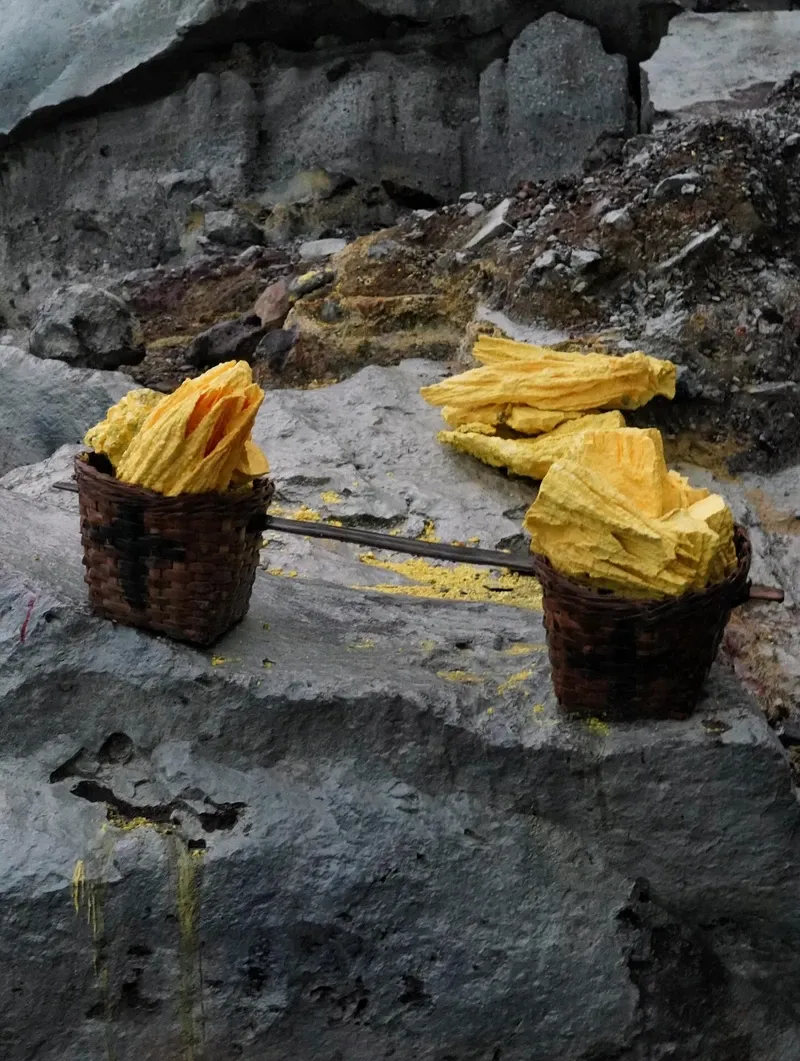
The site operates as a working sulfur mine alongside its tourism function. Miners break cooled, yellow sulfur slabs from the vents using metal rods. They load 70 to 90 kilograms of the mineral into bamboo baskets and carry them up a 25% grade to the crater rim. The trail stretches three kilometers down to the Paltuding base camp. Visitors share this narrow, rocky dirt path with the miners, often stepping aside to let the heavy loads pass.
Toxic sulfur clouds shift rapidly across the crater based on wind direction. Breathing these fumes without a professional-grade gas mask causes immediate lung irritation. Park authorities close the gates without warning when seismic tremors increase or gas levels spike. Hikers must submit a signed medical certificate confirming they have no heart or respiratory conditions before purchasing a ticket. You can rent a proper gas mask at the Paltuding base camp for 45,000 IDR.
Volcanic activity in this region began 300,000 years ago with the formation of the Old Ijen stratovolcano. Magma pushed through the Earth's crust, building a massive cone that dominated the eastern Java landscape. A catastrophic explosive eruption shattered this structure 50,000 years ago. The mountain collapsed inward, leaving behind a 20-kilometer-wide caldera. Smaller volcanic cones, including the current Kawah Ijen, eventually grew along the rim of this depression.
The volcano's last major magmatic eruption occurred in 1817. Ash and pumice buried surrounding vegetation, and the crater lake boiled over, sending acidic mudflows down the mountain's flanks. Since then, the volcano has experienced periodic phreatic eruptions. Groundwater seeps into the magma chamber, flashes into steam, and blasts rock and ash into the air. Geologists recorded significant phreatic events in 1993, 1994, 1999, and 2002.
Artisanal sulfur mining started in the late 1960s. Local men realized they could harvest the pure sulfur solidifying around the active vents. They built a rudimentary system of ceramic pipes to channel the escaping gases, forcing the sulfur to condense and pool into flat, breakable sheets. The mining methods remain entirely manual today. Miners rely on steel bars to pry the hardened sulfur loose before packing it into twin bamboo baskets balanced across their shoulders.
The United Nations designated the Ijen complex as a UNESCO Global Geopark in 2023. This status recognized the site's unique geological makeup and the cultural reality of the mining community. The park administration instituted strict entry requirements in January 2024 to manage the 2,000 daily visitors. All climbers must now present a doctor's note at the base camp, and access is banned for children under three years old. The park also shuts down completely every first Friday of the month for environmental cleaning.
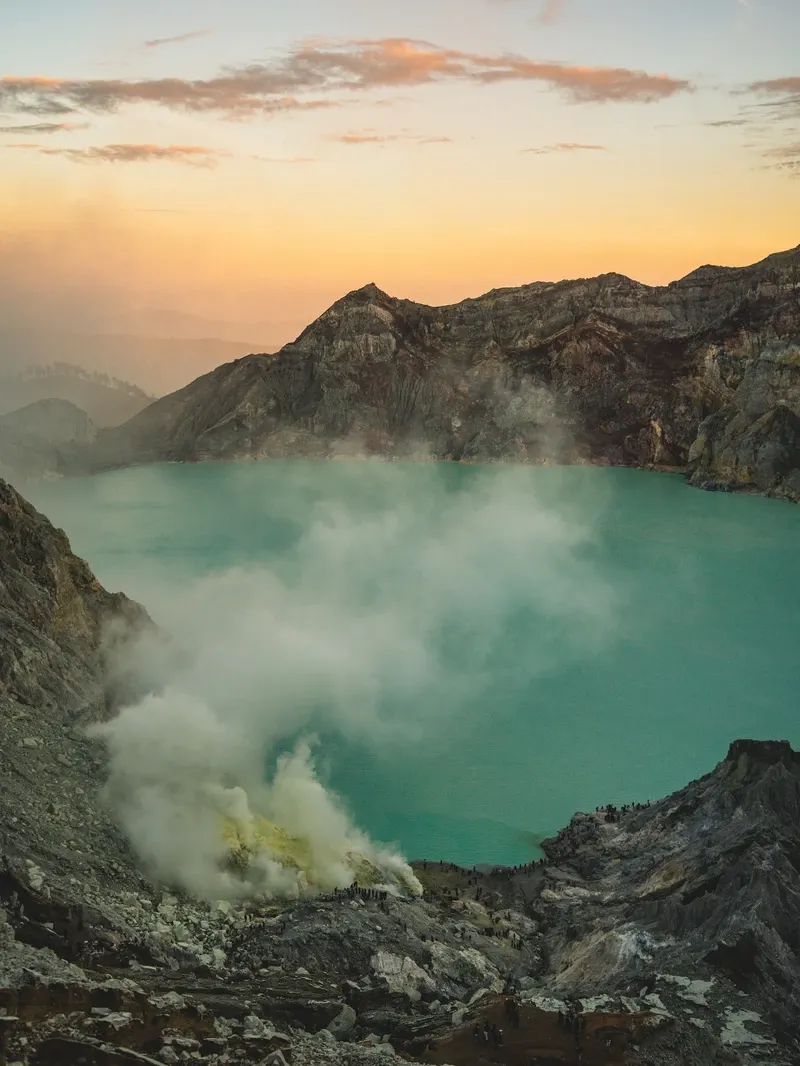
A 200-meter-deep lake dominates the Kawah Ijen crater. The water maintains a bright turquoise color due to high concentrations of dissolved metals and sulfuric acid. Hydrothermal vents at the bottom constantly pump superheated fluids into the lake, keeping the surface temperature around 30 to 50 °C. The lake holds 36 million cubic meters of this corrosive liquid. Contact with the water dissolves fabric and causes severe skin burns.
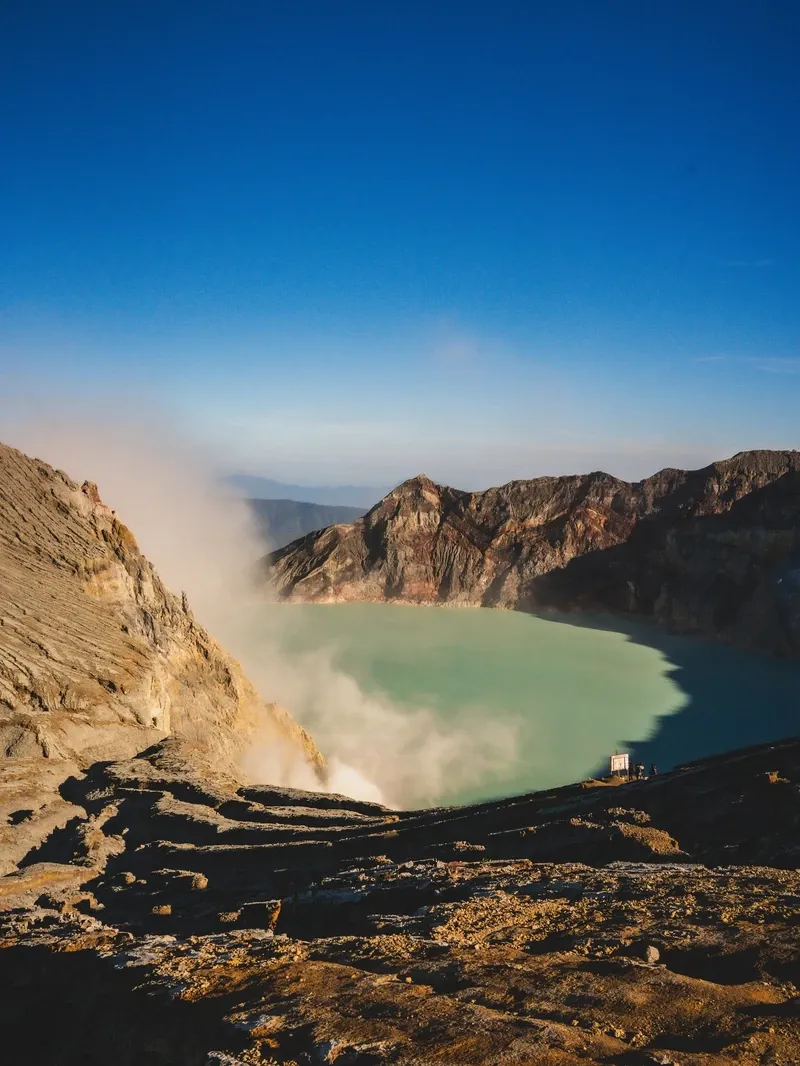
Fumaroles line the southeastern edge of the lake. These cracks in the Earth's crust vent sulfur dioxide and hydrogen sulfide gases at temperatures exceeding 200 °C. Miners have inserted ceramic and iron pipes into these vents to capture the gas. As the vapor travels through the pipes, it cools and turns into a blood-red liquid. This liquid drips onto the ground and hardens into bright yellow sulfur blocks. The escaping gas that does not enter the pipes ignites in the oxygen-rich air, producing the 600 °C blue flames.
The Dead Forest (Hutan Mati) stands near the crater rim. Decades of acidic rain and toxic gas exposure stripped the bark and leaves from these trees, leaving behind a landscape of bleached, skeletal trunks. The hiking trail to reach this rim covers three kilometers of loose gravel and dirt. The path maintains an average slope of 25%, rising from 1,850 meters at the base camp to 2,386 meters at the crater edge. A steep, 800-meter rocky descent leads from the rim down to the lake shore.
The sulfur miners of Kawah Ijen occupy a distinct social position in East Java. They perform a physically demanding job, extracting raw materials used in cosmetics, sugar refining, and fertilizer production. Their daily routine involves carrying loads heavier than their own body weight up a steep crater wall while breathing toxic fumes. This labor spawned a localized micro-economy at the Paltuding base camp, where families operate food stalls, rent gas masks, and offer trolley taxi services.
Local Javanese and Osing communities view the volcano with a mix of respect and caution. The mountain provides their livelihood but also threatens their villages with toxic gas clouds and acidic mudflows. Traditional ceremonies occasionally take place on the lower slopes to ask for safety and stable conditions. Residents monitor the crater's activity closely, relying on official alerts from the Magma Indonesia agency to prepare for sudden evacuations.
The miners' endurance drew international documentary crews and photographers starting in the early 2000s. This media attention transformed Kawah Ijen from an obscure mining site into a major economic driver for the Banyuwangi regency. The influx of tourists shifted the local dynamic, prompting many former miners to transition into guiding visitors or pushing the human-powered pedicabs up the mountain. A private 4x4 jeep ride from Banyuwangi to the base camp now costs around 500,000 IDR, creating steady income for local drivers.
The crater lake has a pH level below 0.3, making it the largest highly acidic lake in the world.
The famous blue fire is not lava, but sulfuric gas igniting at 600 °C upon contact with oxygen.
Artisanal miners carry 70 to 90 kilograms of solid sulfur in bamboo baskets on their shoulders.
The lake contains approximately 36 million cubic meters of acidic water.
The park closes completely every first Friday of the month for environmental conservation and cleaning.
As of January 2024, all visitors must provide a medical certificate proving they have no heart or respiratory issues.
The current crater sits inside a massive 20-kilometer-wide caldera formed 50,000 years ago.
Yes. As of January 2024, all hikers must present a medical certificate from a doctor. This document must confirm the visitor has no history of heart or respiratory issues.
Most hikers leave the Paltuding base camp between 02:00 AM and 02:30 AM. The trail takes roughly two hours to climb. You must reach the crater floor before dawn, as the blue flames are invisible in daylight.
A professional-grade gas mask is mandatory for descending into the crater and highly recommended at the rim. Standard surgical masks provide zero protection against sulfur dioxide. You can rent proper masks at the base camp for around 45,000 IDR.
No. The water has a pH level below 0.3, similar to battery acid. Contact with the lake water will cause severe chemical burns and dissolve clothing.
The path from the base camp to the crater rim is three kilometers long. It features an average slope of 25%, consisting mostly of loose dirt and gravel. The descent from the rim to the lake requires navigating 800 meters of steep, rocky terrain.
The flames burn constantly, but visibility depends on the weather and volcanic activity. Heavy fog, rain, or thick sulfur clouds can obscure the fire. Park rangers will also close the crater descent if gas concentrations reach dangerous levels.
International visitors pay 100,000 IDR on weekdays. The price increases to 150,000 IDR on weekends and national holidays. Tickets must be booked online through the official conservation agency website.
Toilets are only located at the Paltuding base camp. There are no facilities along the three-kilometer trail or at the crater rim.
No. People with asthma or other respiratory conditions are strictly barred from entering. The thick sulfur fumes trigger severe breathing attacks and can be fatal for those with compromised lungs.
Temperatures at the summit drop below 10 °C before sunrise, requiring warm, layered clothing. Wear sturdy hiking boots with aggressive tread for the slippery descent. Choose old clothes, as the sulfur smell permanently embeds into fabric and the acidic gas damages certain materials.
Browse verified tours with free cancellation and instant confirmation.
Find Tours